
Peer support chat – read this bit first
If you are struggling with depression or anxiety, even reading this page might feel difficult. That is okay. You do not need perfect words. You just need somewhere safe to start.
Mental health challenges can make you feel isolated, even when surrounded by people. Anxiety can turn ordinary things into a full committee meeting inside your head. Depression can drain the colour from life. This page is here to give you a calm route into peer support, not a sales pitch dressed as sympathy.

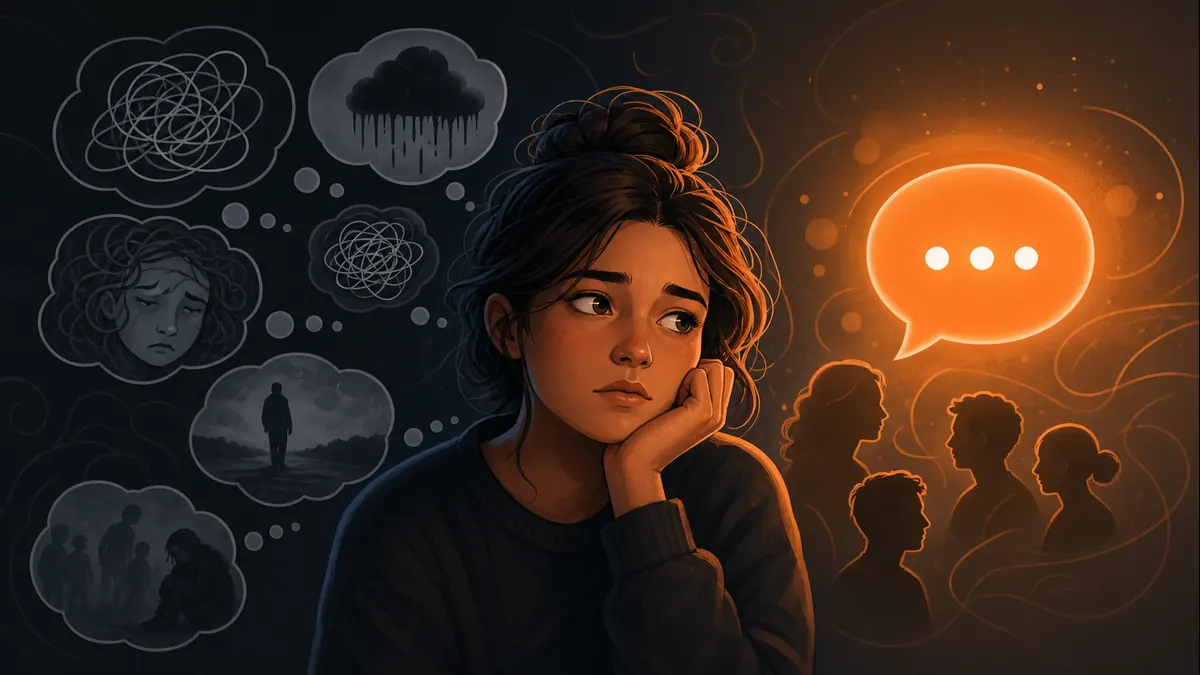
A visual nod to the noisy, exhausting thought loops that can come with anxiety and low mood.
If you need urgent help
If you are in immediate danger or having thoughts of harming yourself, please use proper crisis support now. Online chat rooms can offer peer conversation, but they are not emergency care.
Immediate danger
Call
999
or go to your nearest A&E department.
NHS mental health
Call
111
and choose the mental health option if available in your area.
Samaritans
Call
116 123
free, any time, day or night.
Under 19
Childline is available on
0800 1111
What this space is
A place to talk when your head is doing too much.
Sometimes you need to talk with people who understand what it is like to feel low, anxious, overwhelmed, or disconnected. The chat rooms are there for peer support: ordinary people, real conversation, and a calmer place to be heard.
Anonymous peer support
Share as much or as little as feels comfortable. You do not need to arrive with a life story and a PowerPoint presentation.
No sign-up required
Join quickly without complicated registration, because when you are struggling, even tiny obstacles can feel enormous.
Respectful public rooms
Moderation exists to keep the room usable for people who need support, not chaos in a tab with a username.
Important: this is peer support, not therapy, diagnosis, medical advice, or crisis intervention. If you need clinical support, contact your GP, NHS 111, or a qualified mental health professional.
You might relate if
The outside looks normal, but inside it is very much not normal.
These rooms are for people dealing with depression, anxiety, loneliness, panic, low mood, overthinking, or the general business of trying to keep going when your brain is being unhelpfully dramatic.
You feel constantly on edge or worried about things other people seem to handle easily.
You struggle to sleep, sleep too much, or wake up exhausted anyway.
You feel disconnected from people, even friends or family who care about you.
Everyday tasks feel heavier than they should, and you are tired of pretending otherwise.
You just need someone to talk to who will not dismiss your feelings or instantly try to fix you.
Whatever brings you here, your feelings are valid. There is no perfect reason to seek support, and you do not have to be at rock bottom to deserve kindness.
Why online support can help
Small conversations can matter more than they look from the outside.
Depression and anxiety chat rooms can complement your support options by making connection easier to reach, especially when leaving the house or explaining yourself feels like too much.
Accessibility
There is no travel, appointment, or waiting room. You can access a conversation from home, during a difficult evening, or when anxiety has decided 3am is now a strategy meeting.
Anonymity
A username can make the first step less frightening. Privacy helps some people say the honest thing they have been carrying around all day.
Shared experience
Hearing “I understand” from someone who really does understand can break through the isolation depression and anxiety create.
How to join
No pressure. No forced sharing. No need to perform being okay.
Joining should be simple because when you are struggling, complicated steps can feel ridiculous. You can join, read quietly, talk when ready, take breaks, or leave at any time.
1
Choose a room
Pick the room that feels closest to what you need today.
2
Use a nickname
You do not need to use your real name or share personal details.
3
Talk or just listen
You control your pace. Sometimes being present is enough.
Safety information
What chat rooms can and cannot do.
Peer support, not treatment
People in the rooms may understand what you are going through, but they are not a replacement for doctors, therapists, medication reviews, or crisis teams.
Boundaries matter
You can choose not to share personal information, leave at any time, block people, and report behaviour that feels unsafe or inappropriate.
Moderation helps
Moderators work to keep public rooms respectful, but no online space can guarantee every interaction will be perfect.
Please seek professional help if you are experiencing severe symptoms, thoughts of self-harm, or symptoms that significantly interfere with daily life. Chat rooms work best as an extra layer of support, not the whole safety net.
Choose a room
Find the room that feels right today.
Different days need different kinds of conversation. Pick one, move around, or simply stay quiet until you feel ready.
Low mood
Depression Support Chat
Connect with people who understand the weight of depression. Share experiences, find encouragement, or just be around people who get it.
Ignored Online
Worry loops
Anxiety Support Chat
Talk with people who know what it is like to feel constantly worried, on edge, panicky, or mentally exhausted.
Chat Acronyms
Everyday support
General Wellbeing Chat
A calmer space for mental health, loneliness, tough days, small wins, and the ordinary mess of being human.
Dementia Support
Other support
Use more than one kind of help if you need it.
Chat rooms are one form of support. They can sit alongside professional help, charities, NHS services, and trusted people in your life. You are allowed to build a support system that is bigger than one tab in your browser.
Mind
Advice and support for people experiencing mental health problems.
Anxiety UK
Support and information for people living with anxiety disorders.
Samaritans
Free confidential emotional support, available any time on 116 123.
NHS mental health services
Access professional treatment through your GP, NHS 111, or local services.
Rethink Mental Illness
Support and advice for people living with mental illness and their families.
Mental Health Foundation
Information and resources about mental health and wellbeing.