
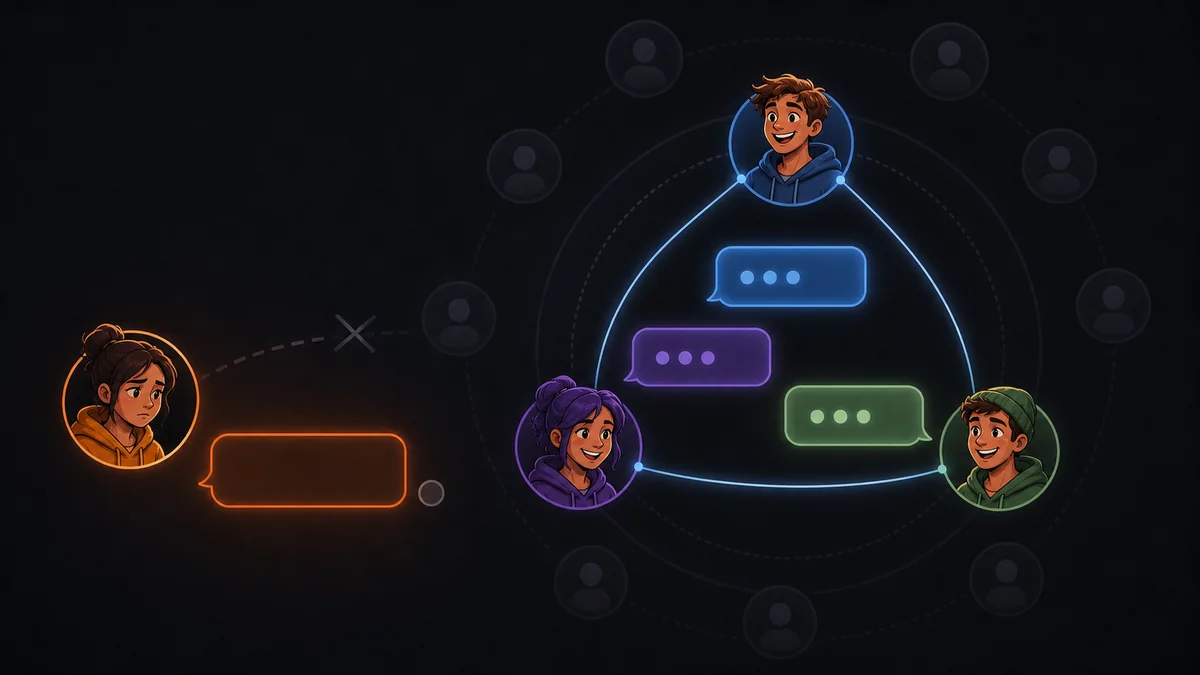
Online exclusion and chat rooms
Everyone has been there: you send a message in a chat room, and nobody replies. It is easy to brush it off, but that little pocket of silence can trigger something deeper than mild embarrassment.
A 2017 study looked at what happens when people are included or ignored in a fake online chat. The short version: even digital silence can feel personal.
15%
messages for excluded users
33%
messages for included users
45%
higher anger reported
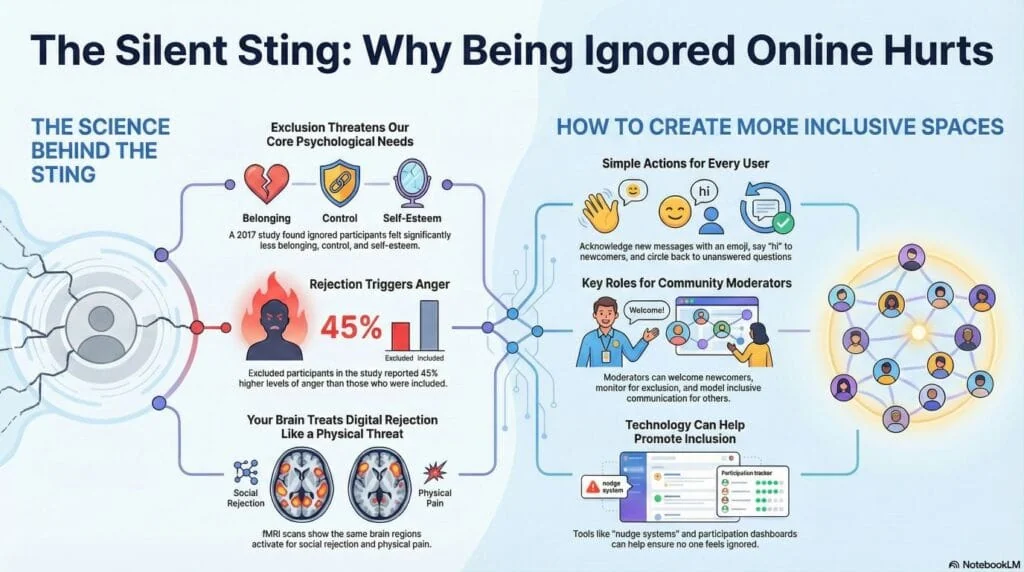
A quick overview of why silence in a chat room can land harder than expected.
The study
What the chat room experiment tested
Published in PLOS One in 2017, the experiment measured the psychological impact of being ignored in digital spaces. Researchers built a fake online chat room with three participants.
Some participants were included and received around a third of the messages. Others were deliberately excluded and received far fewer replies.
After the session, participants rated anger, sadness, belonging, control and self-esteem. The results confirmed what many people have felt but struggled to explain.
“Even in a simple chat room, being ignored made people feel less valued, less in control, and more hurt.”
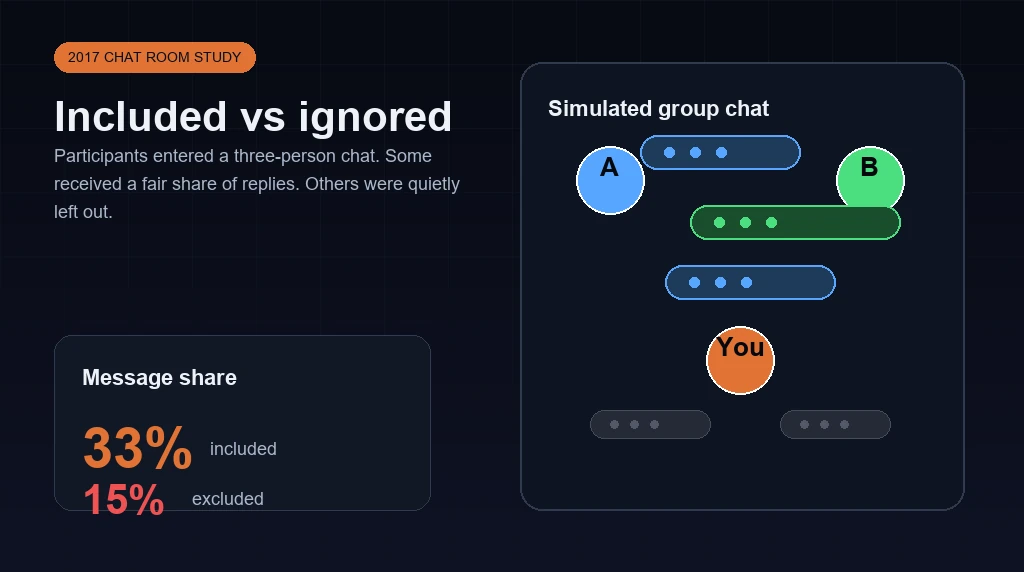
The experimental setup comparing included and excluded chat participants.
Findings
What they found
Ignored participants reported lower belonging, control, self-esteem and meaning.
They showed more anger than sadness, which suggests a defensive response.
People used physical pain words such as “hurt” to describe the experience.
The emotional impact was real even though the interaction was virtual.
Belonging
Ignored users felt less part of the group.
Control
The silence made people feel less able to influence the room.
Self-worth
Being overlooked made the interaction feel personally devaluing.
The brain bit
Why being ignored online can feel so sharp
The pain of online exclusion is not just “in your head”. Humans evolved as social creatures who relied on group acceptance for survival. Our brains treat rejection as a threat.
When someone ignores your message in a chat room, your brain does not politely file it under “just the internet”. It can interpret the silence as social rejection.
When people ignore us online, the emotional system does not always know it is only pixels having a bad manners day.
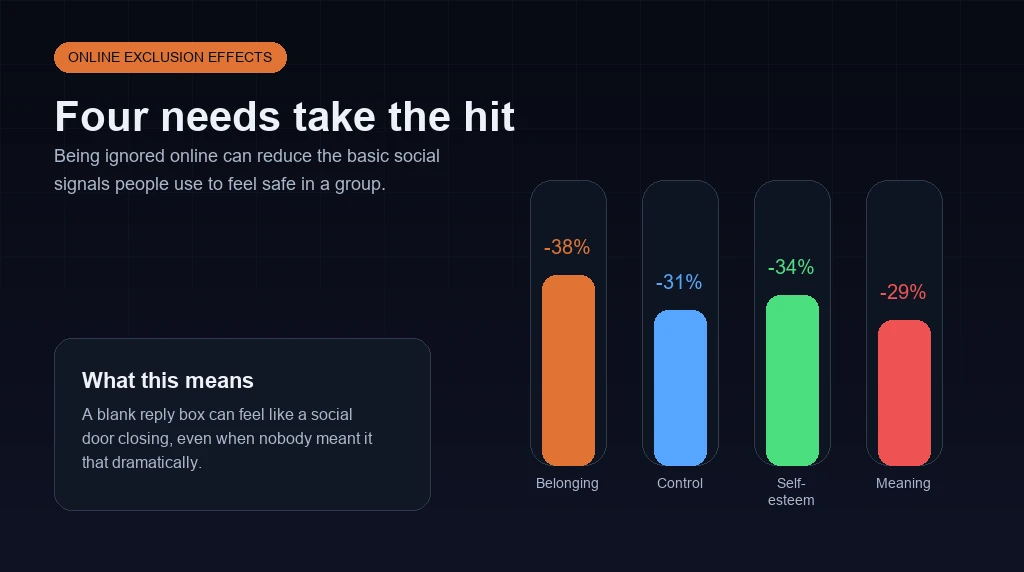
Online exclusion can threaten the same basic social needs people rely on offline.
Community impact
What it means for chat room communities
Chat rooms are not just digital spaces. They are social rooms with real emotional consequences. A message being ignored once may not matter. A pattern of being ignored does.
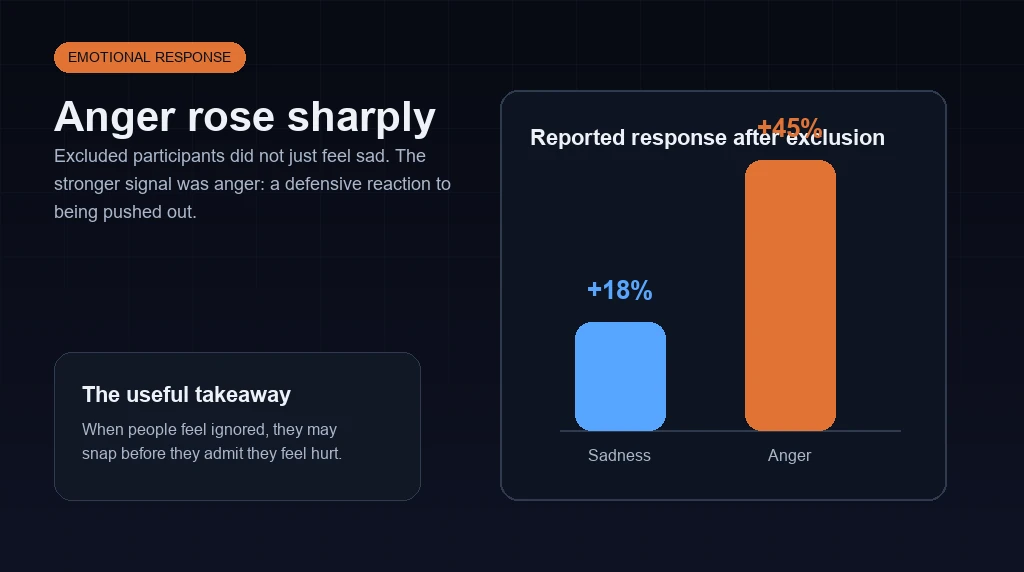
The study found anger increased sharply when people were excluded.
When rooms go cold
New users leave quickly.
Conflict rises because people feel dismissed.
The same few voices dominate the room.
When rooms include people
Newcomers get a proper welcome.
People are more likely to come back.
Moderation helps keep the room human.
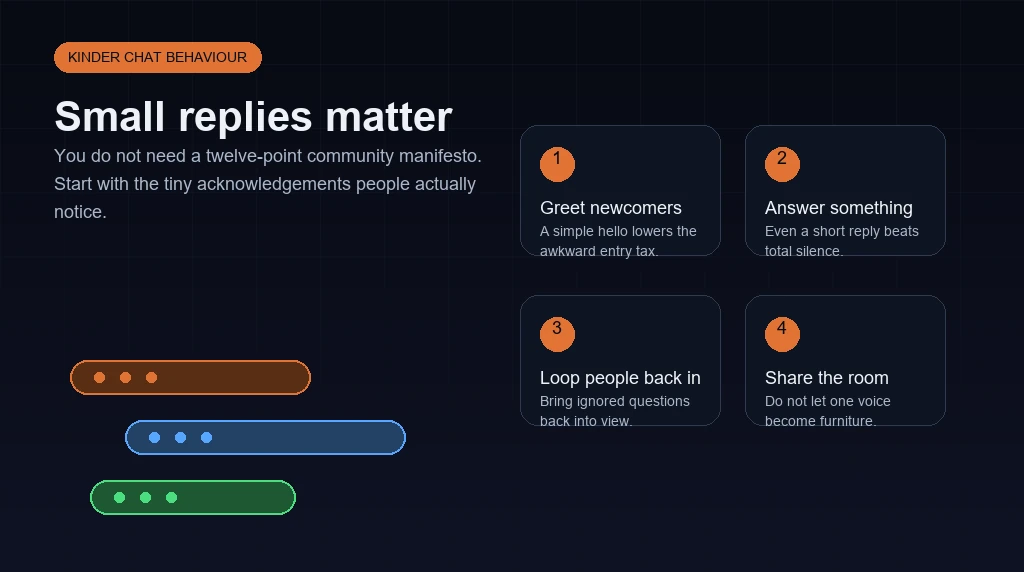
Small acknowledgements can make a room feel less like shouting into a lift shaft.
Practical fixes
How to make online chat kinder
For chat users
Say hello when someone new joins.
Acknowledge messages, even briefly. If you are not sure how to settle into a room, our page on how to use a chat room gives the basics without making it weird.
Circle back to unanswered questions, especially when someone seems low or isolated. Depression and Anxiety Chat Rooms can help when the silence online starts feeling heavier than ordinary awkwardness.
For moderators
Watch for repeated exclusion.
Create space for quieter users.
Model inclusive behaviour.
From research to real life
Every reply is a small signal that someone exists
The experiment happened in a lab, but the message is ordinary and human: inclusion matters. Every reply, greeting or small interaction helps people feel noticed.
Good chat rooms are not perfect. No online space is. But a room with standards, active users and visible moderation can reduce the sting of being ignored.
That is the difference between a room that feels alive and a room that feels like typing into a cupboard.
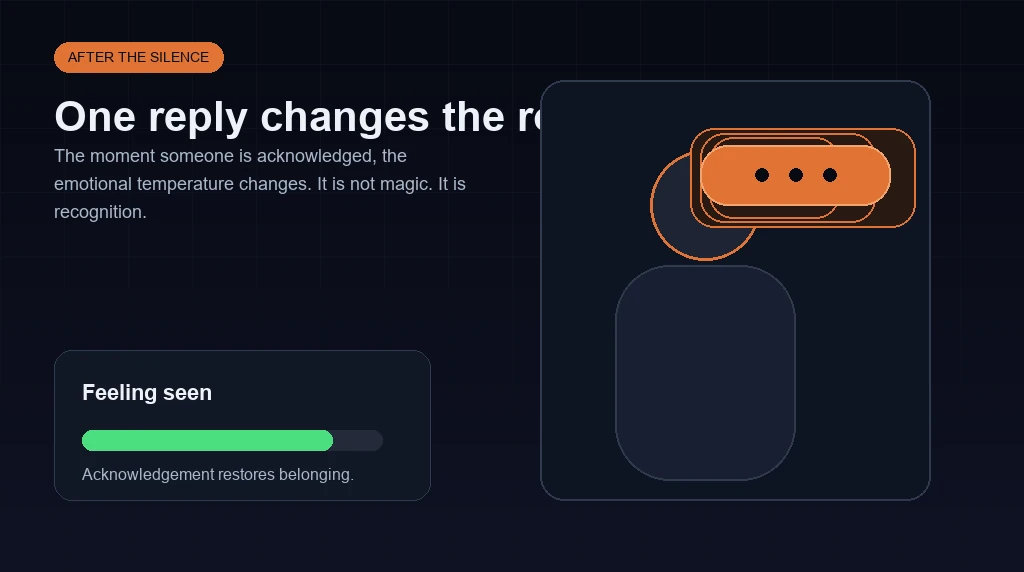
A reply can change the whole emotional temperature of a conversation.
Belonging
Creating spaces where everyone belongs
Online words might be typed in seconds, but they leave real emotional footprints. Whether you are chatting with friends, strangers or a full room, do not underestimate how far a quick “hey, how are you?” can go.
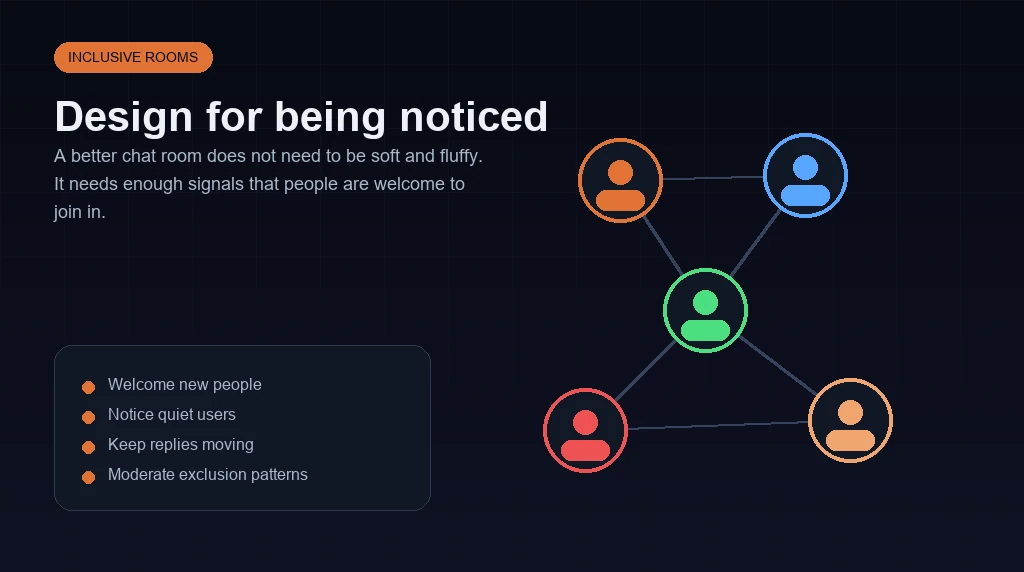
Inclusive communities make it easier for people to join in instead of hovering at the edge.
The science is clear: online exclusion hurts in real ways. The better news is that the fix is often small, human and not especially complicated. Say hello. Reply when you can. Do not let new people vanish into the wallpaper.
Join a chat room where people actually answer.
A friendly room does not need to be perfect. It just needs enough people willing to notice each other.