
2026 critical review
Welcome to the digital equivalent of a nightclub with no bouncers. Chat Avenue has been connecting strangers since 1999, which is impressive in the same way finding a sandwich behind a radiator from 2004 is impressive.
This review looks at the platform’s rooms, safety concerns, moderation claims, mobile experience, paid VIP features and whether anonymous access is worth the risk. If you are comparing older chat sites, our Chatiw review looks more closely at the safety side of online chat. It has traffic, history and that early-web smell, but the user experience can feel like a 2am Wetherspoons with pop-ups.
1999
Long-running platform
3M
Reported monthly users
1.5
Overall rating
High
Safety concern
A long-running chat site with old-internet traffic and 2am pub energy.
Site Safety Scorer
Check the moderation, privacy, and safety risks of popular chat sites.
Analyzing moderation logs & safety reports…
—/10
Platform Name
🛑 Extreme Risk PriorityCritical Safety Issues Found:
SAFE ALTERNATIVE: World of Chat
10/10 Safety Score • Actively Moderated • No Bots • UK-Based
Chat Safely Now 🔒Regulatory update: Ofcom investigation
Ofcom has opened an investigation into the provider of Chat Avenue
On 21 April 2026, Ofcom opened an investigation into the provider of Chat-Avenue and whether it is complying with duties under the Online Safety Act 2023 to protect users from illegal content.
This is now a major part of the review. It is not just a grumpy site owner shouting from the cheap seats. The UK online safety regulator is formally looking at issues including illegal-content risk assessments, children’s access and risk assessments, age-assurance duties and reporting systems. Chatib raises similar questions, so that review is useful if you are comparing older anonymous chat sites.
What Ofcom says it is examining
Illegal content risk assessment duties.
Children’s access and children’s risk assessments.
Moderation and illegal-content reporting mechanisms.
Systems to protect child users from illegal harm.
Why it matters
Ofcom says it encountered concerns about risks to UK child users on Chat-Avenue, including open chatrooms aimed at teens, kids and adults, private messaging, profile creation, video calling and media sharing.
That lines up with the core criticism of this review: a big anonymous chat platform cannot treat child safety, age checks and abuse reporting like optional extras.
Basic facts
What Chat Avenue advertises, and what matters more
Launched in the digital dark ages around 1999-2000, Chat Avenue somehow survived Y2K and continues to operate with reportedly millions of monthly users. It offers a spread of chatrooms for different interests, plus text, audio and video options.
That sounds useful until you look closer. The low-friction access is the whole sales pitch, but it is also the whole problem. No-registration chat can be handy for ordinary adults who just want a quick conversation, but it also creates space for fake identities, throwaway behaviour and users who treat public rooms like the rules were eaten by dial-up.
Advertised strengths
Anonymous access with almost no barrier to entry.
Live text, audio and video chat rooms.
Custom profiles and a big spread of rooms.
Free access, which is doing a lot of heavy lifting here.
The awkward bit
No serious identity verification.
Teen-facing areas that need far stronger protection.
Moderation that can feel powered by three sleepy hamsters.
Safety measures that do not match the scale of the platform.
The issue is not that anonymous chat exists. The issue is what happens when a busy anonymous chat site does not keep up with modern safety expectations and then acts surprised when the room turns into a bin fire with usernames.
Historic weirdness
The Microsoft Chat timing still makes you go “hmm”
Chat Avenue launched just before Microsoft Chat rooms closed in 2003. Coincidence? Probably. But it is still the internet equivalent of opening a questionable fish shop right after the town’s only health inspector retires.
When Microsoft Chat disappeared, old-school chat users needed somewhere to go. Chat Avenue grew in that vacuum and became one of the names people remembered, partly because it was always there and partly because the internet has a strange affection for sites that refuse to leave. Chatroulette later showed what happened to random chat sites when speed and novelty outpaced safety.
2000
Chat Avenue quietly appears in the old web era.
2003
Microsoft Chat closes and leaves a gap.
Now
The site still has traffic, but the old problems have modern consequences.
If Microsoft Chat were still around, the chat landscape might have looked different. Possibly fewer undercover police documentaries. Possibly more MSN nostalgia. Hard to say.
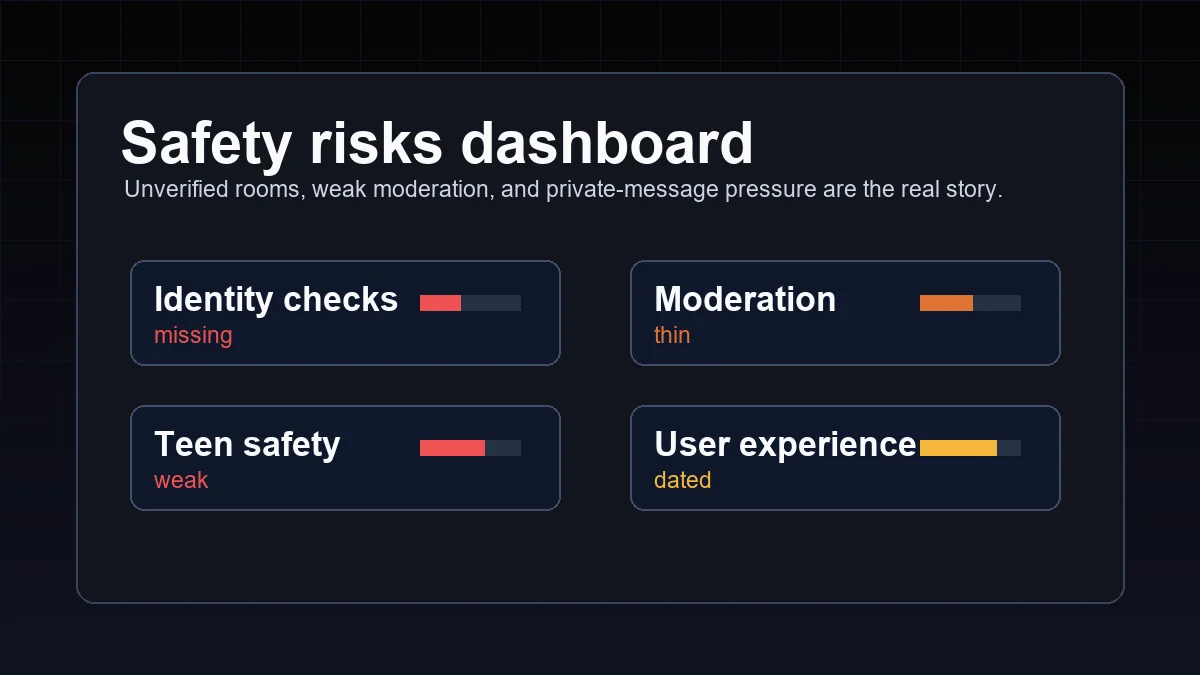
The safety questions are not tiny footnotes. They are the main review.
Safety concerns
Why the risk profile is so high
Anonymous public rooms can attract ordinary people, but they can also attract users who rely on nobody being checked properly. That makes age claims, identity claims and private-message behaviour difficult to trust.
No strong identity verification means fake profiles are easy to create.
Teen-facing rooms need stronger protections than a simple honour system.
Content filters and reporting tools only work if they are backed by visible human action.
Private messages can move risky behaviour away from public view very quickly.
2026 update
AI fake identities and sextortion make old problems worse
The risk has changed since the early web. Fake accounts are no longer just stolen photos and dodgy usernames. AI-generated faces, fake voices and scripted conversations can make an account look more convincing than it deserves to.
For younger users especially, unverified chat spaces can become hunting grounds for financial sextortion and image-based blackmail. The faster a stranger pushes someone into private chat, off-site messaging or photo sharing, the more alarm bells should be ringing.
AI
Fake photos and scripted identities are easier to create.
PMs
Risk often moves from public rooms into private messages.
Speed
High-volume rooms can overwhelm weak moderation.
Moderation
A busy chat site needs more than a report button and crossed fingers
The original review is brutal about moderation, and the point underneath the sarcasm is fair: when a platform hosts large, fast-moving public rooms, safety cannot rely on users just hoping someone deals with it later.

The joke is hamsters. The serious point is that busy rooms need visible human standards.
The joke version is that the moderation system is run by three hamsters on broken wheels. The serious version is worse: a platform with teen-facing, adult-facing and video-facing rooms needs active, visible moderation that users can actually trust.
Good moderation is not about killing conversation. It is about making normal conversation possible. Without it, the loudest, weirdest or most aggressive users set the tone, and ordinary users leave.
What weak moderation creates
Spam, pressure, explicit behaviour, repeat offenders and rooms that feel like nobody is steering.
What better moderation does
Sets standards, removes disruption, protects new users and keeps public rooms usable.
Owner/backstory
My run-ins with Dan and the link-swapping circus
The original review included the personal bit, and it belongs here because it explains some of the bad taste around the platform. Back in 2004, when I was running my own dating website, I ran into Dan, the owner, and the exchange was about as friendly as a tooth extraction without the gas.
The first message
The tone was basically: your website is rubbish and there is no chance you are getting links from us. Charming stuff. Really brought the room together.
The later offer
Then came the kind of offer only the old SEO internet could produce: one link back if I gave five links to his sites. Naturally, the link disappeared anyway later.
That digital protection-racket energy tells you something about the old chat-site world: traffic, links, rankings and attitude often came before user experience or safety.
Comparison
Anonymous chat versus rooms that actually have standards
Chat Avenue’s biggest advantage is speed. Its biggest weakness is also speed. Getting into a room quickly is useful until it becomes just as easy for disruptive users to do the same thing again and again.
A better chat platform does not need to turn into a passport office. It just needs visible rules, active reporting, human moderation and a culture where public rooms are not treated as disposable dumping grounds.
Chat Avenue style
Fast entry, weak checks, inconsistent room standards and a dated interface.
Moderated room style
Clear expectations, visible support, cleaner public rooms and safer reporting paths.
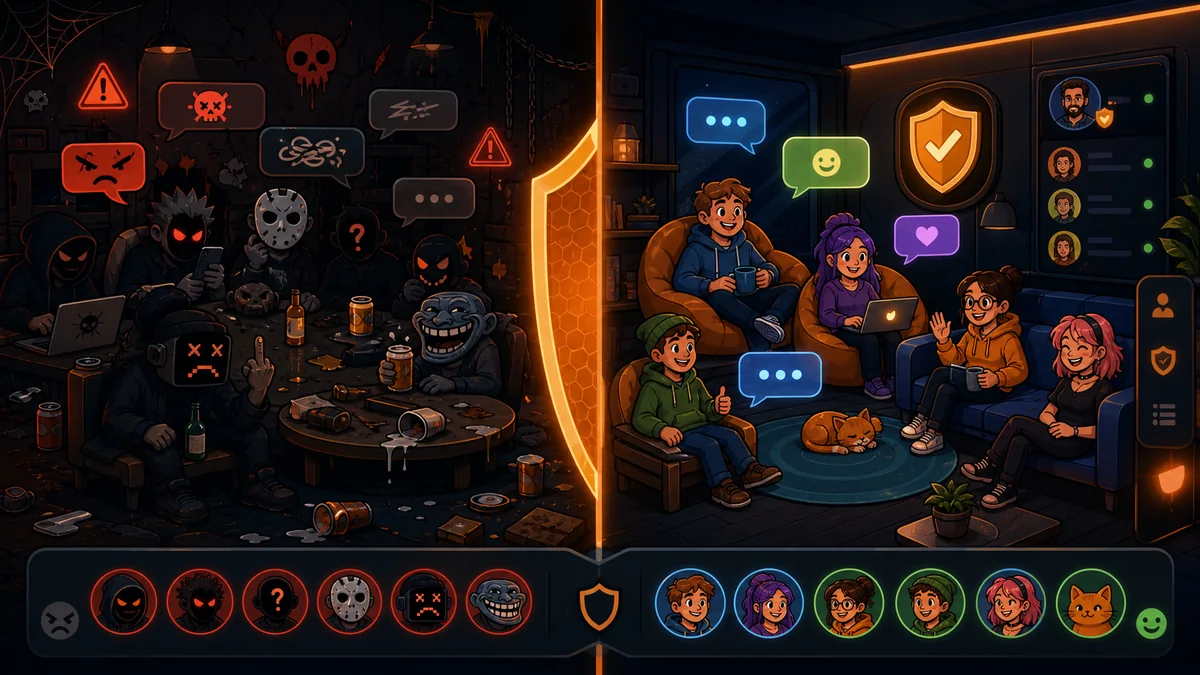
The difference is not whether people can chat. It is whether the room has working standards.
Paid features
The VIP economy: paying for digital paint
Registration may be free, but the site also has a paid VIP layer. On paper, that means profile extras, username styling, uploads and other little status features. In practice, it can feel like buying a velvet rope for a condemned building.
Paid cosmetics are not automatically bad. The question is whether paid status is being built on top of a room culture that is actually worth paying into. A gradient username is not much comfort if the room itself feels like a smoke alarm with a login form.

The VIP economy: shiny digital paint in a room that still needs better basics.
Gradient usernames
A status marker, but not a safety feature.
Image uploads
Useful only when content controls are genuinely strong.
Video access
Needs stricter safeguards than ordinary text chat.
Paying actual money to be a VIP in a room full of hamsters is a level of optimism that even a social scientist would struggle to explain.
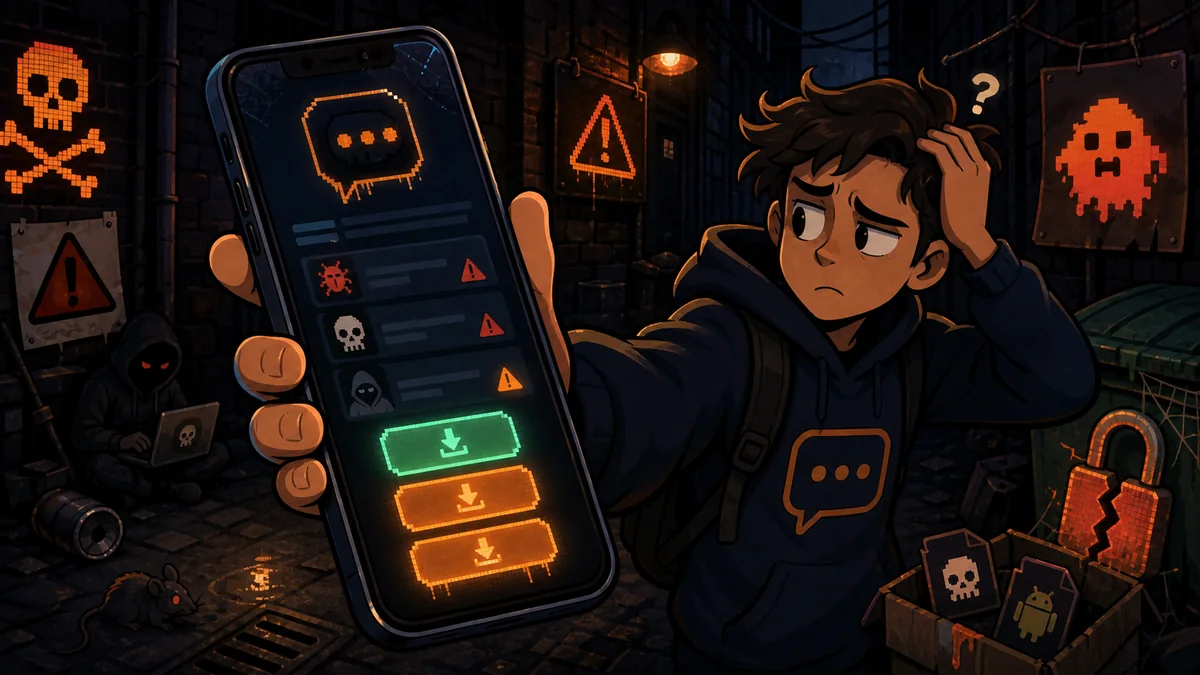
A poor mobile experience can push people toward unofficial downloads, which is exactly where common sense goes to be mugged.
Mobile and app experience
No proper app means extra caution
The lack of a clean official mobile app matters because users may search for alternatives and stumble into unofficial APKs or sketchy downloads. That is not a small inconvenience. It is a security risk.
Browser-only chat can feel cramped and dated on mobile.
Unofficial downloads can expose users to malware or account theft.
Fast-scrolling rooms are harder to manage on small screens.
Pros
What still works
Quick anonymous access for adults who want low-friction chat.
Lots of rooms and active traffic.
Text chat is immediate and easy to understand.
Nostalgia for people who miss the older web.
Cons
What does not
Anonymous access also enables fake identities and throwaway behaviour.
Weak verification makes teen-facing rooms especially concerning.
Moderation and safety expectations feel behind modern risks.
Dated mobile experience and no proper app.
Frequently asked questions
Questions people should probably ask before diving in
Is it safe for teenagers?
Not in any way I would be comfortable recommending. Teen-facing rooms need proper checks, clear moderation and fast abuse handling, not a digital shrug and a “please be honest” sign.
Why is it still popular?
Because it is old, known, easy to enter and busy. The internet often rewards being first and being noisy, even when the wallpaper is peeling off.
Can adults use it safely?
Adults can make their own choices, but they should go in with a throwaway mindset: no personal details, no photos, no trust handed out like free biscuits. If you are newer to these spaces, read How to Use a Chat Room (Simple Guide for Beginners) before treating any public room like a private conversation.
Is the nostalgia enough?
No. Nostalgia is lovely until it asks you to ignore modern risks. Then it is just a lava lamp with a terms-of-service problem.
User testimonials, allegedly from planet internet
The kind of reviews this place seems to invite
“10/10 would risk identity theft again”
Anonymous access is great if you enjoy never knowing whether the person you are talking to is real, bored, banned elsewhere, or all three.
“The moderator is on a coffee break”
The old joke is that the moderation team has been away since 2005. The less funny bit is that users notice when nobody appears to be steering.
“Teen chat means claims, not proof”
A room name does not verify the people inside it. That distinction matters more than the site seems to admit.
Safety advice
If you use it anyway, keep your guard up
Do this
Use a throwaway email if registration is needed.
Keep personal details private.
Leave fast if someone pressures you into private chat or photo sharing.
Do not do this
Do not share photos of yourself or family members.
Do not reveal your location, school, workplace or routine.
Do not click links from strangers who arrived five minutes ago with a suspiciously urgent vibe.
Final verdict
Is Chat Avenue worth your time?
1.5 / 5
Chat Avenue is the digital equivalent of a sketchy nightclub with broken security cameras and bouncers who are permanently “just popping out”. It has history, activity and speed, but the safety concerns are too big to treat as minor annoyances.
From a business point of view, the traffic and revenue may look impressive. From a user-safety point of view, the platform feels stuck between old-internet convenience and modern-internet risk. That is not a comfortable place to be.
If you only want anonymous conversation, it exists. If you want a cleaner, better-moderated room where public chat has standards, there are safer choices.
Safety features
Moderation quality
User experience
Value for money
Choose rooms with standards, not just traffic.
Fast chat is nice. A room that does not feel like a public experiment in poor decisions is better.