
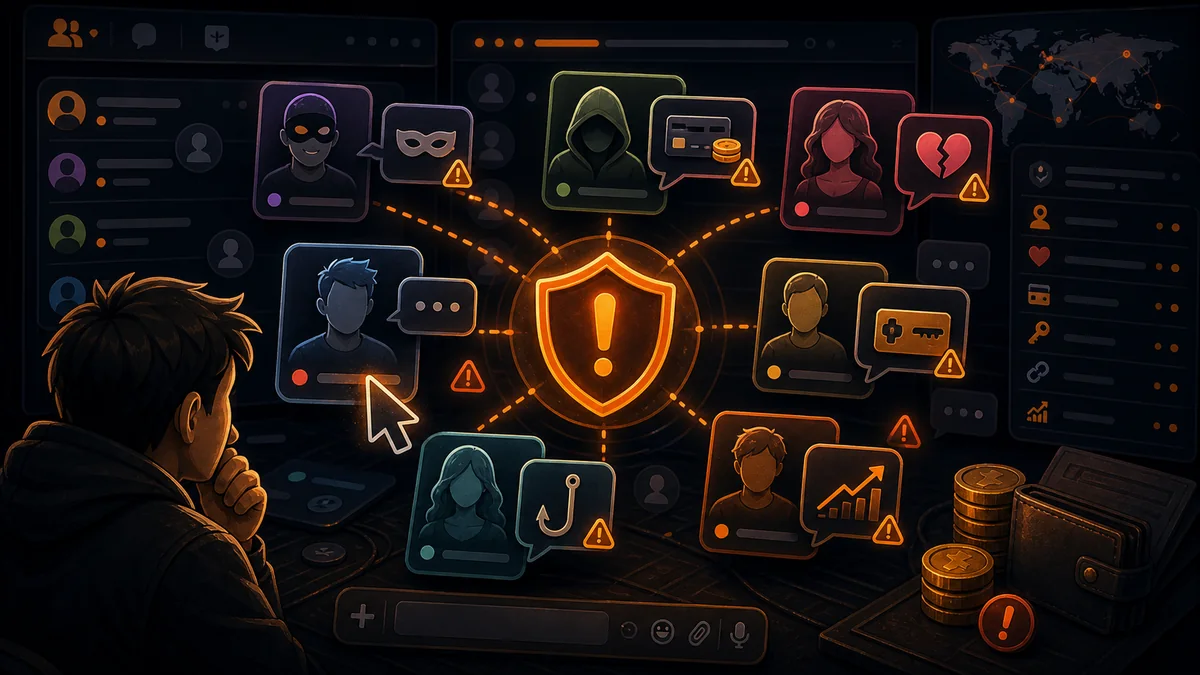
Chat room scams, fake users and digital wallet traps
Some chat sites feel less like a community and more like a waiting room for fake profiles with payment links. Chatiw and Chatib are especially bad for this, and on some days it looks like if you removed the scammers there would be three people left and one of them would be a bot with confidence issues.
The important bit is this: falling for a scam does not mean you are stupid. These people are good at manipulation. They use loneliness, attraction, urgency, shame and fake trust to get money, personal details, clicks or access to your accounts.
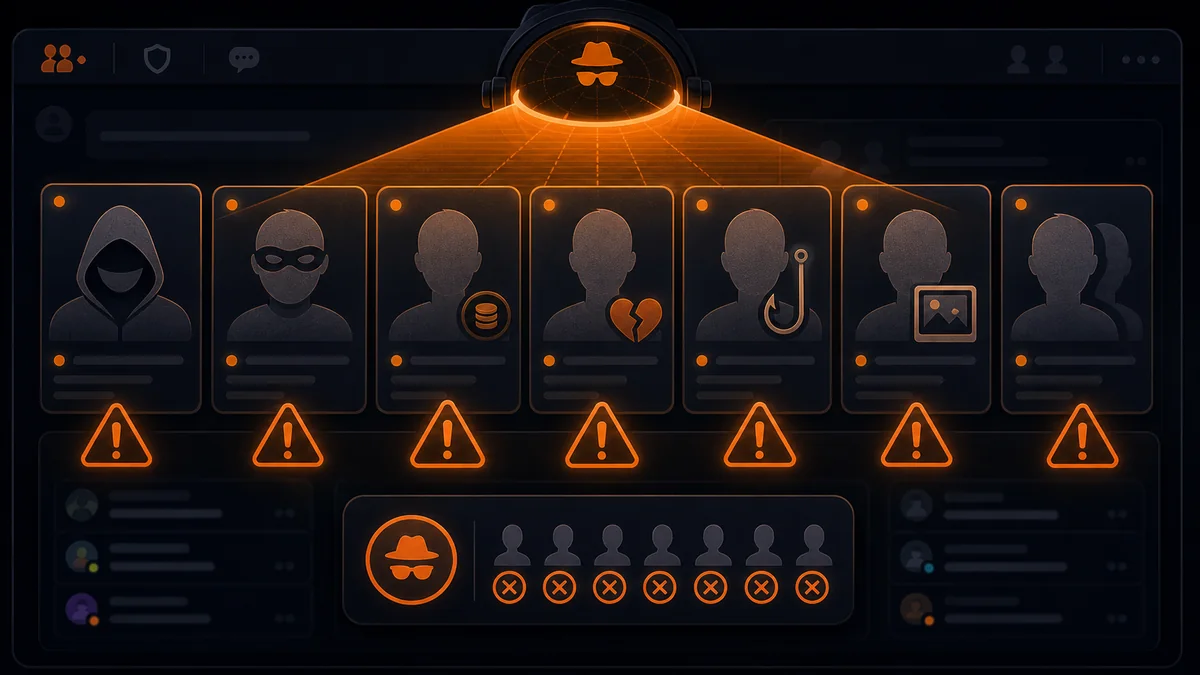
Why chat room scams still work
Chat rooms are fast, emotional and personal. A scammer can test a story, change personality, move people onto another app, and disappear before the room has even finished arguing about whether the new person is real.
Some scams are quick: a fake profile asks for payment and blocks you. Others run for weeks or months, slowly collecting details, building trust, isolating the victim and waiting for the right moment to ask for money or send a dangerous link.
The same trick sits underneath most of them: make you feel something quickly, then make you act before you think.
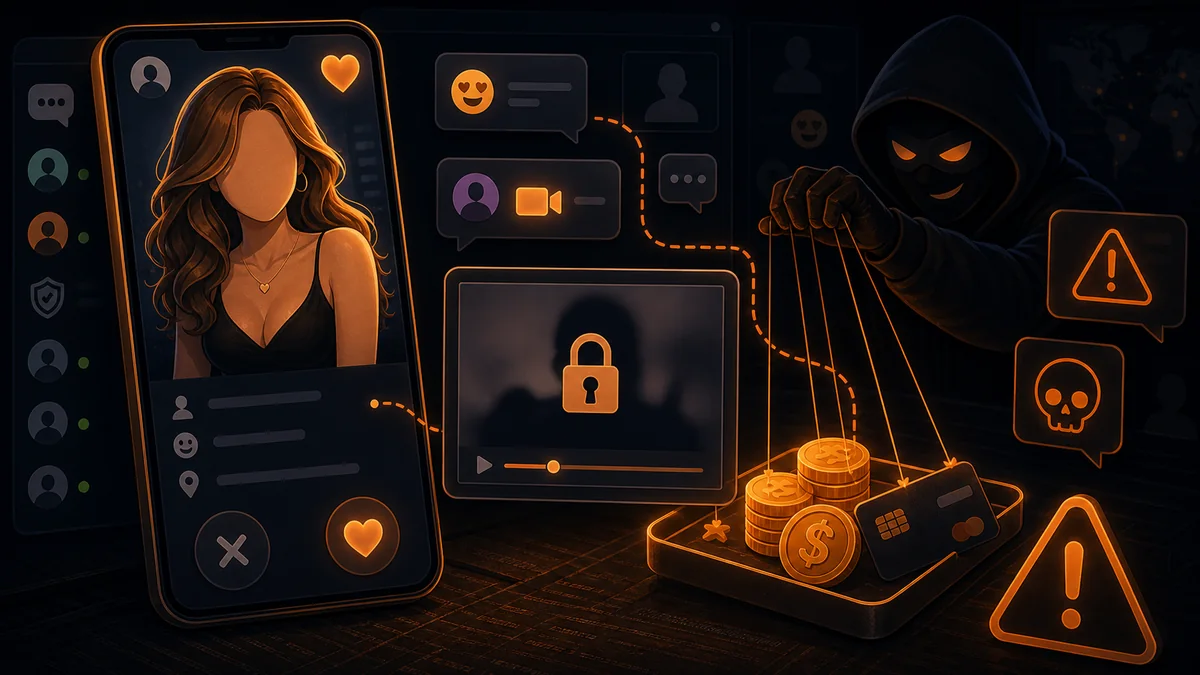
The premium Snap scam
The fake private content trap
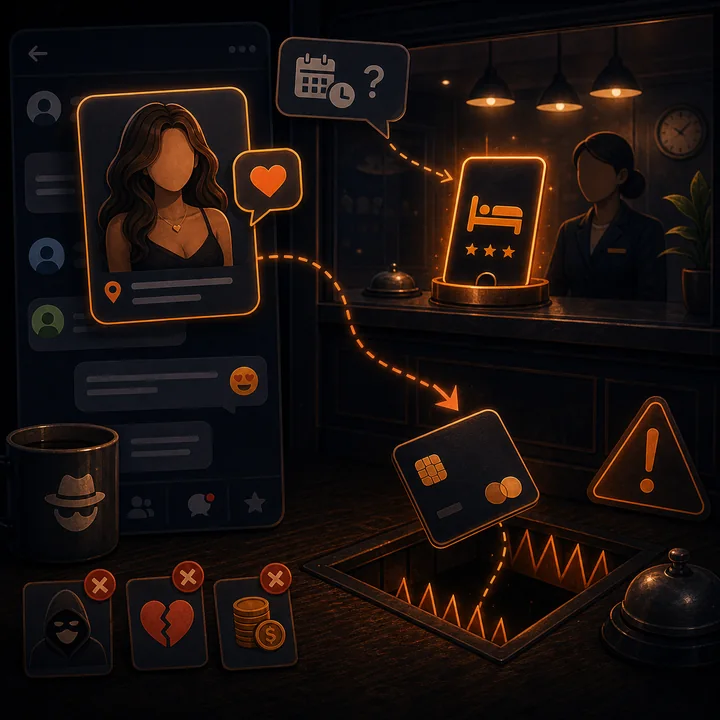
This usually starts with an attractive profile in a chat room. They may move you to another app, act friendly, then suggest private video, pictures or some kind of paid content.
Sometimes they take payment and instantly block you. Sometimes they stream a fake video and pretend it is live. Either way, the point is not romance. It is extracting money from someone lonely, curious or flattered.
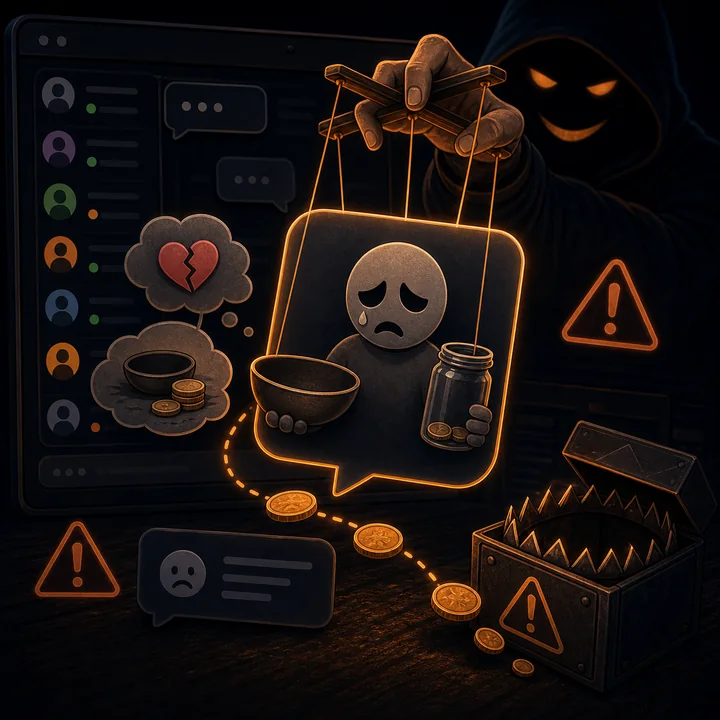
The food, debt or emergency story
The sympathy button gets pressed
This scam uses guilt and kindness. Someone claims they need food, rent, travel money, debt help, medicine, phone credit or rescue from a dramatic situation that somehow only your bank card can fix.
Some people genuinely struggle, but chat rooms are full of people turning fake emergencies into a business model. If the story becomes urgent, emotional and payment-focused, step back.
Fake local meetup
“I’m nearby, let’s meet” and the hotel pass scam
This one tries to feel local and exciting. A fake profile says they are near you, suggests meeting up, then suddenly there is a hotel pass, booking fee, transport cost, verification charge or other nonsense payment standing between you and the imaginary person.
The trick is the same every time: make the meeting feel close enough that you stop questioning the payment. If someone you just met in a chat room needs money before you can meet, that is not romance. That is admin with lipstick on.
Links, wallets and fake profits
The investment and phishing scam
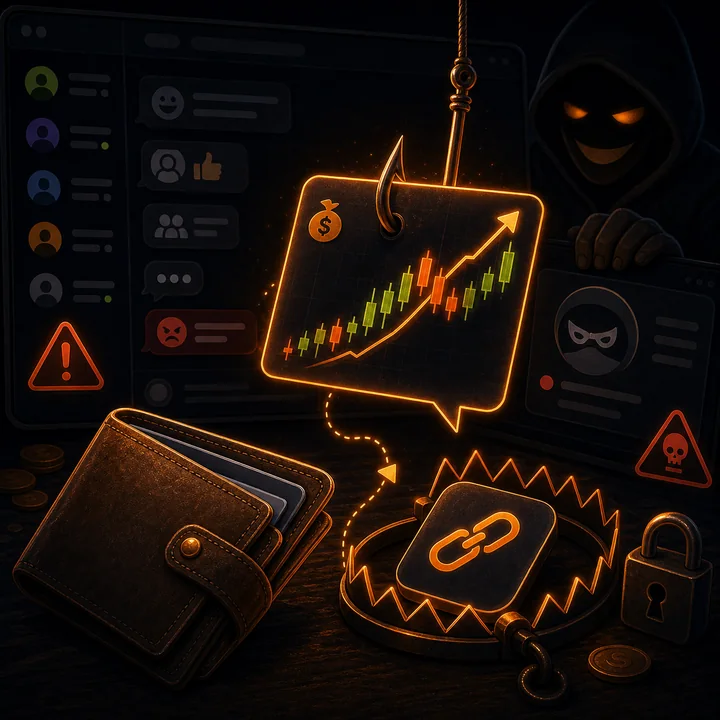
Some scammers skip romance and go straight for fake money-making schemes. They may claim they can help you trade, invest, double your money, recover lost funds, or access a secret opportunity that apparently lives inside a random chat room at 2am.
Others send links to phishing pages, malware, fake login screens or ?verification? sites. The goal can be your money, your identity, your accounts or your device. The same warning applies to fake profiles and AI-assisted deception, which we cover in The Fake Identity Threat: AI, Chat Rooms and Online Safety.
Do not click mystery links from chat strangers. Do not install files. Do not enter bank details. Do not treat a chart with a big arrow as financial advice from the gods. The same basic caution applies on mobile devices, so iPhone and iPad Chat Rooms users should still avoid unknown downloads and login pages.
If a stranger in a chat room rushes you, flatters you, isolates you, asks for money, or sends you away to a payment link, your scam alarm should be louder than their sob story.
How to avoid chat room scams
Do not send money
No content fee, hotel pass, travel emergency, food money, investment deposit or verification charge for someone you just met in chat.
Keep details private
Your full name, address, phone number, workplace, private photos and account details can all be used against you later.
Stay on the site
Moving to another app quickly is often how scammers get you away from moderators, reports and public scrutiny. Serious cases can cross into criminal behaviour, which is why our Undercover Police in Online Chat Rooms article is useful extra reading.
Question urgency
Scammers love panic. If the story needs action right now, that is usually because thinking would ruin it.
Do not click links
Unknown links can lead to phishing pages, malware, fake logins or sites designed to harvest your details.
Report and block
If something feels off, report the profile, block them, and do not keep negotiating with a person whose job is manipulation.
What should you do if you get scammed?
First, do not let embarrassment make the scam worse. Scammers rely on shame because it stops people asking for help. If you sent money, contact your bank or payment provider quickly and explain what happened.
If you clicked a suspicious link, change passwords from a clean device, enable two-factor authentication where you can, and run a proper security scan. If you shared personal details, watch for follow-up scams, fake recovery offers and identity misuse.
If the scam involved threats, blackmail, illegal content, identity theft or a serious financial loss, report it to the relevant authorities and keep screenshots, usernames, payment records and chat logs. Do not send more money to “fix” the first payment. That is how the second trap opens.
How scammers build trust
They mirror your interests, reply quickly, use believable photos, act vulnerable, make you feel chosen and slowly test what you will reveal. Some keep notes. Some work in teams. Some are not trying to fool everyone, only the one person who is having a bad night.
The World of Chat approach
Clean public rooms, active moderation and sensible reporting help reduce scams, but users still need to protect themselves. The safest rule is simple: chat is for talking. Your wallet does not need to join the conversation.